Category: Film Bocugu

  • Star Wars: The Last Jedi

    Episode VIII is the second movie made by Walt Disney in the Star Wars series. Its name is Last Jedi. This time, it is not a very similar copy of the previous episodes, where in The Force Awakens, nearly everything was like a carbon copy of the previous movies.
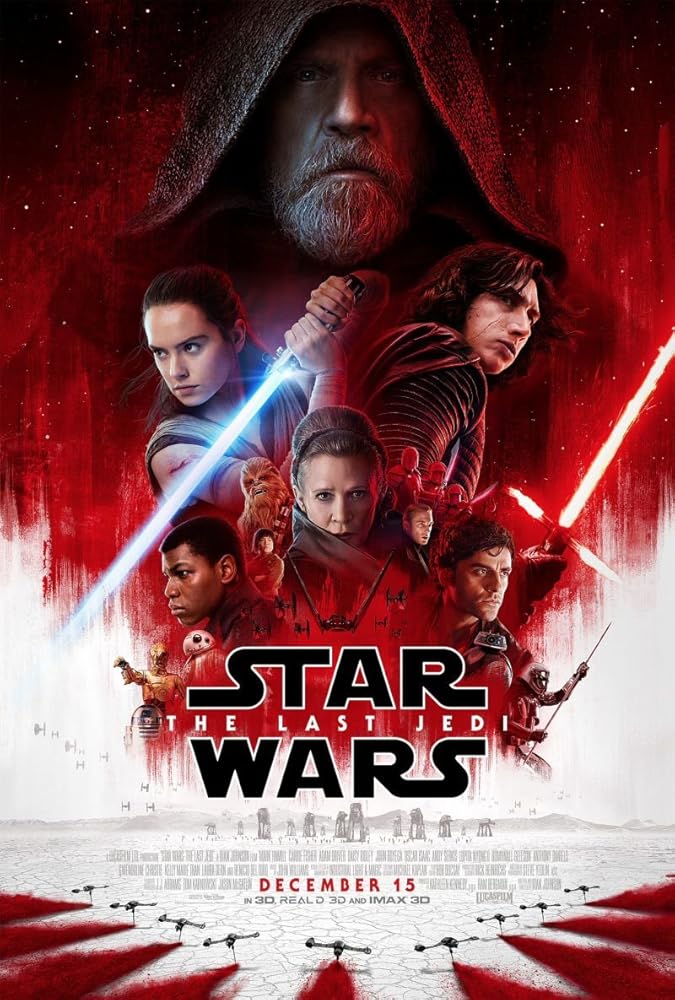
    Star Wars: The Last Jedi

    We already met the new characters in The Force Awakens, so I will not get into details. We have a new Jedi Candidate, Rey. A new Darth Vader: Leia’s son Kylo Ren. New R2D2: BB-8. Of course we have characters from old series as well, e.g. Leia, Luke, Chewbacca. So, you have the copyrights, you have the characters, let’s make money! Sorry, let’s make the movie 🙂

    When you talk about Star Wars, you must be careful, because there are millions of fans. They know every detail of the Star Wars universe. I am sure the writers are also one those fans. (I say writers, because although there is only one author credited, I am sure many people contributed to the final script). However, it may not be sufficient to be a fan of the Star Wars. You must have a good story to tell, because original Star Wars had a descent one. Just imagine, your father is on the dark side, and you convert him into the light, the good side of the force. There are space ships everywhere for the nerds, force for the spiritualists, a fight for freedom and peace for the activist, Yoda for the conservationist. You have lots of new stories in the emptiness of the space. You have nice visual effects.

    So, what does the new Star Wars have in it, or does not have in it? Again it has a bad character who is on the dark side, Kylo Ren. WE don’t know if he will convert to light or not. There is balance or Ying Yang for the interested spiritualists. The last jedi vs darkness. The rebels fight for their freedom against the evil forces. Of course again we have Yoda and the old books of Jedis. We have better visual effects. Wait, did you realize. We have everything that we already had! It seems like a rephrasing of the old star wars series. The new series does not have much novelties to tell.


    Of course, this doesn’t mean that there isn’t anything worth to see. First of all, this is a big budget movie, which means that technical issues are correct. The scenario also doesn’t have big problems, except not being creative. There are some details which will be probably explained later, e.g. Master Codebreaker‘s role, who is advised by Maz Kanata. It is also worth mentioning that there will be new Star Wars spinoffs including Solo, which is based on Han Solo. So, if you like Star Wars, keep tuned in!
  • MEF – Martıların Efendisi (Lord of the Gulls)

    Mehmet Ada Öztekin’s first long-métrage movie (literally long, lasting about 120 minutes) “Lord of the Gulls” is playing in theatres as of 22nd of December. Centralizing the naïve,  schizophrenic character (Lord of the Gulls [MEF]) and setting the story around this core, the script (Meriç Demiray) is consisted of crowded and scattered pieces which are not difficult to follow, however causes a superficial narrative.

    The story starts in June 16th, 2013. We see MEF (Mehmet Günsür) by the seaside (Tuzla, Istanbul) talking to the gulls, pretending to be accompanying them with his long-sleeved open cardigan. He yells at his caretaker, Suphi (Barış Yıldız), via imitating the voices of gulls. He says that they should be prepared that night. MEF is so excited, because he is expecting a dreamy assisstant to show up from the sea to help him in achieving his secret mission in the hidden land.

    Indeed, a semiconscious young woman (Bige Önal) who attempted an unsuccessful suicide is washed ashore coincidentally that night. MEF goes almost to an euphoric state. He names her as Ms Dream, and starts to train her for this delusional mission.

    In reality, Ms Dream’s name is Birgül. She is a run away bride who has thrown herself into the sea at her wedding night due to an unwanted marriage with Cafer (Nejat İşler).

    I will let you follow the rest of this intersection on the screen, mainly via the MEF’s axis.

    The cast almost always becomes more than important when a disability is the fact. Mehmet Günsür is indisputably the most beautiful face and look in the silver screen. His rounded-brown eyes are sufficient to grab you into a hearty character even if he does not make a single move or say a single word. However, given the complexity of this particular cast, my impression is that he should have done more observations with real patients or had a closer attention over credible past imitations such as Jack Nicholson. Some recommendations could have been less eye blinking during the ocular movements, or looking with pinched but exophtalmic eyes unfortunately which might not be easy to manage with such close ups…

    Having acknowledged the shots, frankly speaking, I might have not seen such a close shooting since Joan of Arc in 1928. For instance, I had difficulty in understanding like-15 times changing camera movements during a phone conversation of Birgül with his boyfriend. If shots and light were aligned accordingly, the acts would definitely appear more convincing and powerful. More on the cinematography, I wish that filters or light would be reflected in a more standardized way so that we could automatically get into the themes. One more thing completely from my point again, I found this time lapse effect totally unnecessary. I may find it useful to an extent in the advertising industry but not in the movies.

    To close the cast; Nejat İşler shines in all scenes, starting from dropping his cigarette from his mouth at first until the very final appearance.

    I can interpret the plot, as have also been mentioned above, superficial and full of a little bit of everything. Though not remembering in details, I think that there may be some referrals to Kosmos (2009, R.E.) as well. MEF is quite a long movie for its duration however still one-dimensional. I felt overall like that the script had to walk in hurriedly before a final adjustment. I was curious about the  characters that were not expanded, and wonder why one or one-and-a-half conflicting point was not selected or scraped out deeper. Several matters to close the loop, for example, are what happened to the other members of the MEF’s family that he hallucinated during one of his psychotic attacks, or why MEF was shown like coming from an upper family standard after which we did not see any hints of it, but almost the opposite.. Putting everything in one plate is always susceptible to leaving open gates for the audience behind..

    Last thing regarding the score (Toygar Işıklı): it was remarkable and in line with every bit of the created atmosphere.

    This drama would have been a milestone if the plot and other technical aspects were overseen in a more technically accepted way. Agree it or not, cinema is an art of a very technical kind; and has its own mathematics…

    One tag line that I could capture in between is: MEF suggests that everyone is a run away at some point of his/her own life. If you have time and do not raise your “like” bar to the stratosphere, you can have a little break for 120 minutes of your life and see MEF…

  • Mr. Robot*

    Mr Robot is a TV show about a hacker who tries to make his own revolution. Although it seems like a technological show, it is much more related to politics. I would classify it closer to Continuum with less science-fiction. However, I must admit that most of the hacking staff in the movie is science-fiction. You must be psychic to be able to hack all of those passwords with a good guess.

    The series has a good connection with the audience because the characters in the show are from daily life. They work in an office with many personal problems. Elliot works in his boring cubicle just like Mr Anderson from Matrix and does hacking at nights. Of course he is 100 times more talented than regular hackers, otherwise why would this be an interesting story? Indeed, the story begins when he decides to do something to make the world a better place.

    Until now I have given similarities to Matrix, so if you are fan of Matrix, you will probably like this one as well. But this is not all. The series have many references from Fight Club to Clockwork Orange. So if you like to discover all the details, you will like it because each scene has a special item to discover. But more importantly, the series has its own style. It is very dark and depressive. Unlike awaken Neo, Elliot is always in a state of depression. To overcome his problems, he is deciding that the world is the reason of his and everybody’s problems and he tries to change the world to make it a better place for everybody.

    This is where the main question of the show starts for me: should you change the world starting from yourself? Would this mean a solution or a surrender? Or should you change the world? Elliot selects the latter one. But will it bring happiness to the world or should he undo everything for a new start? Since the show is highly political, this brings some questions from the real world. For example what would happen if the greedy companies are destroyed. Does it make the world a better place? If no one has any debts, would this solve the problem? Although the show is negative to these questions, we should remind that the real world is negative to the other case where the governments back up the big companies after the crisis. It has been a long time and still there does not seem to be a solid exit from the economical crisis.

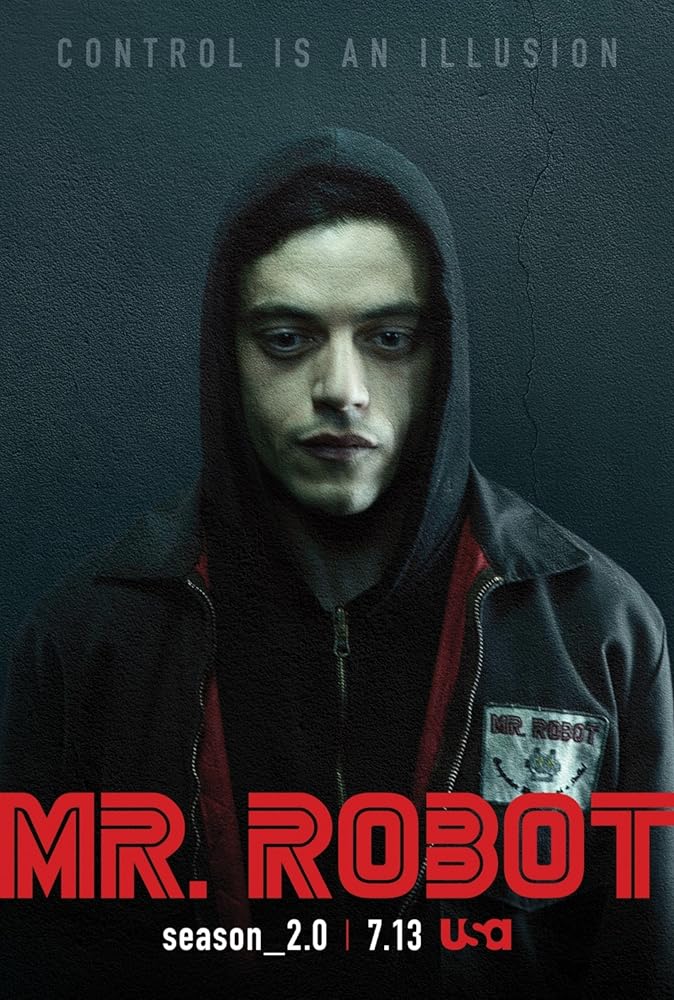
    Official Poster of the show

    I will not get into details about the lack of the correct economic views in the show. But one thing is that it is trying to say to the audience that it does not matter what you do about the evil corporations, there will be another monster waiting for you under your bed. Indeed it says that control is an illusion, which is equal to saying “Don’t try to struggle. You will lose anyway”. This is not the only political message, also there are messages related to Trump (do I need to say that it is anti-Trump?), China (indeed many details from dark army) and many other small details. I believe that they have a good collaboration with experts in their fields. If you know the technological investments of intelligence organizations, you will realize that this show is doing a good job. I think Robert Redford should be a guest star in at least one of the episodes as a tribute to ‘Three Days of Condor’ .

    Turkish room in Mr Robot

    A final note about the co-producer of the series. Kor Adana is Turkish and probably inspired the team about the room with a Turkish flag and Ataturk statue where the scene was related 2015 G-20 meetings. They are doing a great job and taking care of every detail. I guess this is one of the reasons why techno geeks are really into these series. They really make everything seem like real.

    I am not sure what was the initial expectation for the duration of the series, but currently it seems like it exceeded the expectations and the story is expanding a lot more than necessary. Although it is a great story I believe it is time to wrap up the it. Otherwise the story will flow even slower which will make it darker and more depressive or the stories will become unrelated, e.g. go more into real life politics which is good when you see the actual president of US in one scene, but I don’t think favoring one politician for another is a good idea. They may embarrass you when they have power, so it is best to keep a distance to all of them unless they are retired 🙂

    • Caution: This review is written in the third season, so it may contain some spoiler about previous seasons/episodes. Read it at your own risk!
  • Thor: Ragnarok – Is it Asgard or Asgard beings?..

    After six years, a new Thor-titled series has been released as Thor: Ragnarok, this time presented by Marvel Entertainment overwhelmingly. For those who are curious, Paramount Pictures‘ support seems to have been replaced by Walt Disney Pictures in the current one.

    This piece brings us back to the holy nine realms where Thor, Odinson, king of Asgard (after the former ruler Odin) and god of thunder, is defending against his sister Hela, goddess of death, in order to preserve peace (or questionably his power maybe) and to protect people.

    Until Thor and Hela meet for the struggle to boost, here we go with

    • the introduction of Thor in a cage captured by the fire demon Surtur foretelling a dreadful prophecy, Ragnarok, which will be revealed at the end of the sequel for its becoming true or not;
    • Thor‘s interim beating Surtur for the crown of Surtur to prevent his resurrection by the Eternal Flame; and
    • exclusive referrals clearly to Greek mythology (rather than pure nordic myths) such as grape eating Odin watching a classical tragedy in pleasure / the B.C. costumes though all is appearing in smart tech times with various models of space ships that travel at the speed of light etc.

    One can even say that the plot is a modified version of the classical Hellenistic plays in terms of design. Just, it likely varies for its complicated frame of the characters: mighty Thor, seemingly peaceful and encouraging Odin, tricky Loki, saviour Heimdall, and she-evil Hela. The main characters are surrounded closely by stronger side ones or villains as mostly intended in Marvel comics: Grandmaster (Jeff Goldblum) being a prototype for that, there are also some greyish ones like Hulk (Mark Ruffalo) or Valkyrie (Tessa Thompson) which serves to add further complexity to the cinematic universe.

    The overall flow is well-put. The plot’s dynamic and professional structure pays for the high technology used in shooting. In other words, Taika Waititi‘s directing and the adaptation can be concluded as to cover the expenditure finely.

    Cast can be interpreted as pretty much successful as well, in particular having those great actors in place, i.e., Anthony Hopkins (Odin) and Benedict Cumberbatch (Dr. Strange). For instance, a lesson-wise intonation of Odin makes the scene unforgettable during the following conversation with Thor:

    Thor (Chris Hemsworth): ”I am not as strong as you!”

    Odin (Anthony Hopkins): ”No, you are stronger…”

    Or it all changes when the camera is in 177a Bleecker Street, Dr. Strange‘s house in Midgard (Earth) where Cumberbatch shines with his hypnotic ability of acting. Once again, it is proven that the magnitude of acting is not counted by the number of minutes that an actor is on screen, however it stands for the emotional and intellectual impact after the movie ends.

    Chris Hemsworth, physically, draws a very American Thor at first glance with a narrow forehead and small eyes. It can be teased as the irony of evolution like what happen to Norse Gods when they come to New World.

    I do not want to mention Cate Blanchett as Hela since I am personally more than fed up with her unchanging alto timbre, more or less with the same resonance, for years…

    However, aforementioned two gigantic actors and glazing visual effects still save the cast, I can say. Only few comments both to that overused blurry background whilst aiming to emphasize the characters in the front, and the unproportional images of Surtur shots. The idea to exaggerate Surtur versus Thor seems a little bit ”pretended”, unfortunately due to a perspective trap.

    In a nutshell, Asgard as the head of nine realms where peace was known to be brought by Odin encounter a ”to be or not to be” problem in Thor: Ragnarok.

    Thor: Ragnarok asks: will Asgard kneel before the queen of death or will it fight for survival? Furthermore, is Asgard a place to be saved but the people, or is it the people?.. Or should the enemy that was created somehow be destroyed at a price of smashing Asgardians’ land, perhaps?..

    Including the revolutionary IMAX 3D optics, Thor: Ragnarok (2017) holds its own specialties worth seeing.

  • BladeRunner: 2049

    BladeRunner: 2049

    Do androids dream of electric sheeps? It is a novel written by Philipp K. Dick in 1968, and yes, the name of the android in the movie is “K.”. So, do you still wonder about the relation between the movie and the book? You are right, BladeRunner: 2049 is a sequel to the movie made in 1982, BladeRunner directed by Ridley Scott, which was based on the novel “Do androids dream of electric sheeps?”.

    The original movie was in a near future after the 2019 nuclear war. In that movie, the duty of our cop Rick Deckart (Harrison Ford) was to distinguish the androids from the humans. Again we have a cop (K.) whose duty is to find the illegal androids and to terminate them. Like many of the sequels, there are many similarities between both of the movies. Afterall, if you have a good formula, why not use it? Indeed, this is what I don’t like about sequels, they use the successful formula and forget to create a new story. We should also remind that the initial movie was a great success in becoming a cult science-fiction movie. But id did not have the same success for its performance in the theatres.

    There are some serious differences from the original BladeRunner. First of all, BladeRunner:2049 has much more psychological explanations. The original movie had more action thanks to Ridley Scott. In the new version the characters have more time for thinking. But the plot goes very similar to the previous one.

    Relation to the book?

    Another important difference is that in this one, we are faced with a Pinocchio. The main character of our movie, police K., has a deep desire of feeling like a real human. You feel like he is searching for his magical fairy. If you look at the movie from this window, then you may say that Jared Leto is Gepetto. You can even find a whale where Pinocchio manages to run away from it. Furthermore, it is not only officer K., who wants to become like a human, but all the androids have this hope. They want to have similar rights to humans, because they believe and want to prove that they are similar to humans. Although this is different from the  idea of the original book, it is interesting. But, it is not emphasized strongly.

    In the original book, the question was not that whether the androids can have similar properties with humans or not, rather it was even if they have very same properties with humans, does it make them conscious entities. Do we have the right to shoot them if they are conscious entities? I see the new movie as simplifying this question to a level where the androids can also have same properties with humans, and so they are conscious entities, we should not shoot them. While it is simplifying the problem, it shows as if it is more sophisticated by introducing more psychological motivations with respect to the first movie.

    I think there will be even further sequels to this movie if the performance in theatres is successful. This movie is not as influential as the first one, but probably it is more successful in terms of numbers. Probably we will see further in the next movie related to the independence movements of the androids, and probably they will live in peace with humans by missing the main point of the original book.

  • Mother!

    A New Era in Aronofsky’s Style? or Yeah, Next Time It Will Be Better?

    It is difficult to talk for a movie full of metaphors without giving any spoilers. Even this is a spoiler itself. But, if you are used to Aronofsky’s movies, you already know what you will face with in Mother!. So, I will not talk about the details of the movie, or try to reveal out the metaphors, which would need a few tens of pages of explanation at least. Rather, I will talk about my own expectations and the relations to the old movies of Aronofsky.

    In his interview for Mother!, he tells that he was not sure for making the movie, so he sent the initial text to a few friends and they encouraged him to make it. Indeed, you get this uncertainty when you are watching the movie. The director is not sure how to connect everything. The events are unrelated to each other. Sometimes there seems to be a relation in between stories. You expect it to be established. How distant can they be in a small house occurring in a limited timeline? But he’s making it once more. Everything is happening at infinity, but you don’t realise it. To be able to really understand what is happening, you must watch it a few times. The feeling of the curiosity is increasing from time to time. However, you still have the feeling that something is missing in the movie.

    In mathematics, there is something called as completeness. The official explanation is “the state or condition of having all the necessary or appropriate parts.”. Since Aronofsky usually thinks in terms of mathematics, as you may have noticed from his movie ‘Pi’, I always expect complete movies from him. Indeed, this was the case until Mother!. Even if you don’t get it very easily like in ‘Fountain’, there was always a completeness in his movies. I mean that even if you don’t get the metaphors, it is still a movie with a plot. Everything starts and finishes in the movie, there is a story in front of your eyes, and a ‘secret’ story behind the metaphors. You can enjoy it with the feeling that there was something more in it. But in Mother!, this is not the case. If you don’t get the metaphors, it means nothing. The movie doesn’t connect the stories in the plot. This is not his style. Maybe this is a new era in his filmography.

    Another point is of course the musics of the movie. There are good movies of Aronofsky without Clint Mansell, I agree. However, when he works with Clint Mansell, it is a classic: e.g.: Pi and Requiem for a Dream. You can watch these movies just for the music. They force a feeling of completeness in the movies. They must be occuring for a reason. This is divine.

    Of course artists will try new things, they gain different experiences and reflect these in their new eras of their life. I totally respect this. However, I have to say I like the early style of Aronofsky. There was always mystisicm in his movies, but this is more than that. For my flavor, he needs the unseen hand of divinity, he needs Clint Mansell.


  • Logan – Wolverine Finali

    Wolverine’i de vururlar. Veyahut kurt kocayınca köpeklerin maskarası olur.


    Logan – Hugh Jackman’ın canlandırdığı Wolverine serisinin son filmi. Tabi bu kadar fazla sayıda hayranı olan bir kahramanın hepten ölmesi söz konusu değil, ancak en azından bu filmin sonunda Wolverine huzura kavuşuyor.

    Film çok uzak olmayan gelecekte, 2029 yılında geçiyor. Xavier bunamış, Logan’ın kankası Gambit dahil X-Menler ortadan yok olmuşlar. Çizgi-roman takipçileri için bir başka alternatif gelecek senaryosu. Sırf Logan için yaratıldığından mıdır bilemiyorum, oldukça yapay bir dünya söz konusu. Logan’ın sarhoşluğu şaşırtıyor mu, aslında hayır. Ama tamamen iyi karakterlerin belgeseli haline dönüşen bir aksiyon filminde kötü karakterleri çoluk çocuk dövüyorsa insan olmaz olsun böyle Wolverine demeden edemiyor. Logan zaten oldu olası depresif bir karakter. Kendini jiletleyince derisinde iz kalmaması en büyük derdi. Her hafta birilerini öldürdüğünden kederlenecek bi şey bulması da zor olmuyor. Yapımcılar da oturmuşlar, düşünmüşler, bu Wolverine’e etmediğimiz ne kaldı, bari gömelim de helvasını yeriz demişler. Çok afedersiniz, ne anası, ne bacısı ne karısı kalmıştı. Bari yattığı yerde huzur bulsun.

    Filmin konusu kısaca: Eğer Wolverine iyileşme yeteneğini de kaybederse ne yapar? Bir de üstüne çocuğu için ölme şansı olursa, daha nolsun. Film gelecek nesil x-menlere göz kırpayım, Logan’ı ağır abi göstereyim, önceki x-menlerin çanına ot tıkayayım derken ortaya karışık yapmış. Bir x-men aksiyonu için bile çok zorlama bir senaryo. En güzel tarafı hiç kuşkusuz Johnny Cash’in ‘Hurt’ şarkısı. Şarkı X-men içindeki (belki de yaşından ötürü) en felsefi karakter olan Wolverine’e ölümü göze alan mahallenin sığ bıçkın delikanlısı muamelesi yapılması ile tezat oluşturuyor. Christopher Nolan bir de Wolverine’e el atsa fena olmazmış dedirtiyor insana.


    “I will let you down

    I will make you hurt

    I would keep myself

    I would find a way…”

  • T2 Trainspotting 2

    Trainspotting 2: Bir baltaya sap olamayanların hikayesi.

    Eğer ilk filmi izlediyseniz zaten bu adamlardan bi bok olmaz demişsinizdir. İşte bu ikinci hikaye ilkini doğrular nitelikte. Tabi Star Wars gibi aynı senaryoda sadece karakter isimleri ve macera süreleri değiştirilmemiş. Karakterler aynı, maceralar farklı.

    Aynı oyuncuların 20 yıl sonra tekrar bir araya gelebilmesi hiç kuşkusuz ilk filmdeki hikayenin herkes gibi oyuncuları da içine çekmesinden. Trainspotting’in devam kitabı niteliğinde olan ‘Porno’ kitabındaki gibi 10 yıl değil arada 20 yıllık bir süre var. Yönetmen Boyle bunun sebebini oyuncuların iyice yaşlanmasını beklemesine bağlıyor :). Aslında ilk filmin sonunda arkadaşlarına kazık atıp paraları alıp kaçan Renton bu filmin başında bir kalp spazmı geçirmese 20 yıl sonra bizler de eski mahalleyi biraz zor görürdük. Filmde denildiği gibi, dünya değişmiş, herkes ona ayak uyduramasa da. Tabi burada bir parantez açmak gerek. Filmde dünyayı kimlerin ne yönde değiştirdiğine dair bazı göndermeler var, ancak detaylar yok. Dünyayı filmde izlediklerimizle aynı kuşağın değiştirdiğine şüphe yok. Google, Apple gibi şirketler aynı jenerasyonun şirketleri. Ahlakları da filmde izlediğimiz karakterlerden çok farklı değil. Neticede aynı devrin çocukları. Bir baltaya sap olmuş olmalarının belki de en büyük sebebi biraz daha uslu çocuk olup büyük patronu kazıklamamış olmaları. Neyse parantezi kapatalım.

    Renton mahalleye dönünce arkadaşları hem dövüyor hem seviyor. Eh haksız sayılmazlar. 20 yıldır insan bir arayıp sorar. Gerçi onun da haklı sebepleri var. Amsterdam’a gitmiş, evlenmiş, iş güç sahibi olmuş. İşsiz kalmasa zaten dönmezdi. Arkadaşlar bir araya gelirse ne yapar: eskileri yad ederler. Hele bunu yeni neslin önünde yapmaları ayrı bir tat. Eskiden atari vardı, ne biçim oynardık diye bir nostalji gibisi var mı? İşte o sırada dışarıdan nasıl gözüktüğünüzü bu filmde görebilirsiniz. Ama tabi ben öyle yapmıyorum, benimkilerin hepsi çok ilginç ve eğlenceli anılar.

    Eskiden gençlik vardı, tek dertleri biraz uyuşturucu ve alkol için para bulmaktı. Bu sefer ekmek elden su gölden değil. Para bulmaları şart. Karakterlerimizden hiçbirisinin iş güç sahibi olmadığı düşünülürse bu zor işin üstesinden gelmeleri bir film konusu oluyor. Tadınızı kaçırmamak için şu kadarlık bir tüyo vereyim: Avrupa Birliğinden kerhane açmak için kültürel miras projesi geçirmeniz film hilesi değil ;). Saçma sapan işlere para almak için Avrupa vatandaşı olmanız ve işin içine kültür katmanız muhtemelen yeterli. Peki film nerede karışıyor derseniz şiddet yanlısı dostları Franco hapisten kaçıp kendisini kazıklayan Renton’un şehre döndüğünü duyunca diyelim.

    Choose life demeden Trainspotting olur mu, olmaz. İlk filmi izledikten sonra ODTÜ kütüphanesinden bulduğumuz senaryodan ezberlediğimiz bu replik için şimdi internette bir arama yeterli:

    “Choose life
    Choose Facebook, Twitter, Instagram and hope that someone, somewhere cares
    Choose looking up old flames, wishing you’d done it all differently
    And choose watching history repeat itself
    Choose your future
    Choose reality TV, slut shaming, revenge porn
    Choose a zero hour contract, a two hour journey to work
    And choose the same for your kids, only worse, and smother the pain with an unknown dose of an unknown drug made in somebody’s kitchen
    And then… take a deep breath
    You’re an addict, so be addicted
    Just be addicted to something else
    Choose the ones you love
    Choose your future
    Choose life”

    Bu filmden ilk filmin etkisini beklemeyin. Belki de siz yaşlanmışsınızdır, olamaz mı?

    PS: İlk film uyuşturucuyu özendiriyordu filan diyorsanız bunu izlemeyin. Sonra istifa filan edersiniz, şantaj videoları çekmeye kalkıp filmin üstüne atarsınız 😉

  • Big Eyes – From Big Eyes to Crazy Eyes…

    bigeyes“I think what Keane has done is just terrific. If it were bad, so many people wouldn’t like it”, says Andy Warhol while the screen slowly turns out to Big Eyes of Tim Burton.

    Big Eyes begins in 1958 in North California where the artist Margaret Ulrich (Amy Adams) leaves her town and her first marriage behind, to set a new life in San Francisco with her little daughter and paintings on the back seat. While she is trying to adapt a new life with a new job in a furniture company, she meets Walter Keane (Christoph Waltz) who introduces himself as an artist that has to deal with real estate business to support himself better as an artist. Margaret, influenced by Walter and his romantic gestures, accepts his proposal, and the couple gets married.

    Margaret Keane keeps on drawing her expressionistic paintings that are typically known for her saucer-eyed creations and as she calls them ‘eyes are windows to the soul’. The honey months of this supportive and happy marriage will evolve into something harsh after Walter initiates a business on the art of Margaret’s by acknowledging that this artwork belongs to his own.

    Based on a true story, it shows, mainly, the cruel face of human soul that can spread like an opportunistic infection when it finds a liable environment in all means. The story by Scott Alexander and Larry Karaszewski (Ed Wood, Man on the Moon) progresses in an appreciable balance where Walter‘s commercial talent becomes insidiously an evil for the family. The dramatic climax in this true story is where Margaret accepts Walter‘s lies as truth at first hand, and allows him to pursue his lies. The writers have done a successful job; first, by having an in-depth investigation over the event and characters, second by aligning them in a perfect order easily to follow, third by enriching the plot with supporting scenes such as the Good vs Bad Art discussions and the role of the critic in arts, and fifth by achieving to take us sides with Margaret. Perhaps, there are only two questions that could be raised regarding the script: One of them is whether it could have been a rather soft transition regarding that psychopathic match striking scene to be more in line with Walter‘s personality that has been expressed till that moment. The other one is whether Margaret‘s decision to divorce Walter could have been based on a more convincing or solid ground rather than a spiritualistic awakening.

    Amy Adams as Margaret does a great acting to display this sensitive and vulnerable beautiful soul. She acts so realistically naive and over-patient that the audience is fully engaged to the painter with deep sympathies by the end of the movie. Christoph Waltz as Walter draws a cartoonish character that sometimes takes us to Hans Landa in Inglorious Bastards.

    It is noted that Margaret Ulrich, the real self, can also be seen in the movie on a park bench reading a book when Margaret and Walter are in front of the San Francisco palace of Fine Arts. As another available filming note, some of the outdoors have been shot in Vancouver, Canada, where the steepy streets resemble San Francisco very much.

    Tim Burton‘s static camera and symmetric shoots in the introduction gives us the hints of a dramatically balanced and perspectively designed 106 minutes movie. Together with Bruno Delbonnel‘s (Amélie, Inside Llewyn Davis) cinematography, Burton uses a non-invasive technique with no brain- and eye-killing approach but a highly internally penetrating artistically portray. Yet, the photography is literally customized for Big Eyes 1950s and 1960s atmosphere.

    Burton, who has collected himself Margaret Keane’s artwork for years, and Big Eyes invites Burton fans and cinema lovers to see the transforming story of an initially charming husband into a domineering monster over a naive and talented wife, just maybe an everyday life of a woman on the edges of losing her voice in a male dominant environment.